

STREVER FARM LONGHOUSE I
RESIDENTIAL
STREVER Farm LONGHOUSE I
Strever Farm Longhouse grew out of a layered process of construction and experimentation, shaped by experiences across Mexico, the United States, France, and Brazil. Research into regional typologies and the history of the land led to a clear conclusion: the architecture should stay quiet, letting the landscape's own beauty lead. The longhouse takes the form of a simple, elongated bar, one that appears and disappears with the changing seasons, transforming alongside the passage of time, while always leaving you room to take it all in.
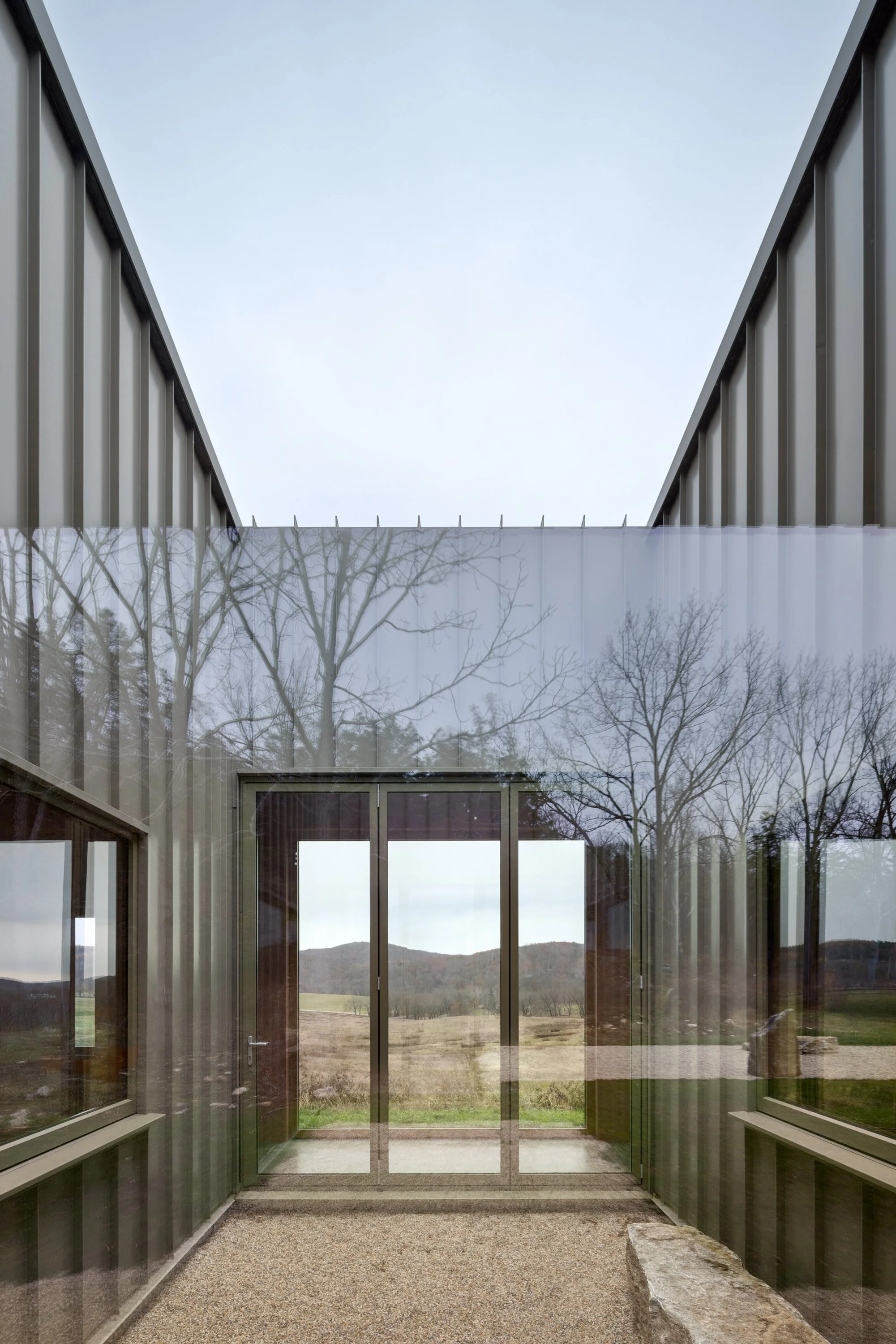
A unique convergence of architecture, landscape, and preservation. Half of the land remains forested, while the other half supports a grassland and bird habitat. The land speaks of the Mohican (People of the River) and their encounters with the Iroquois (People of the Longhouse). Inspired by the Iroquois longhouse, with its vaulted ceilings and minimalist geometry, we set out to carry its footprint into the present: retaining the longhouse's proportions while, within budget constraints, reimagining the structure in a modern language, embracing local knowledge and materials to create a resilient design aligned with passive solar principles.
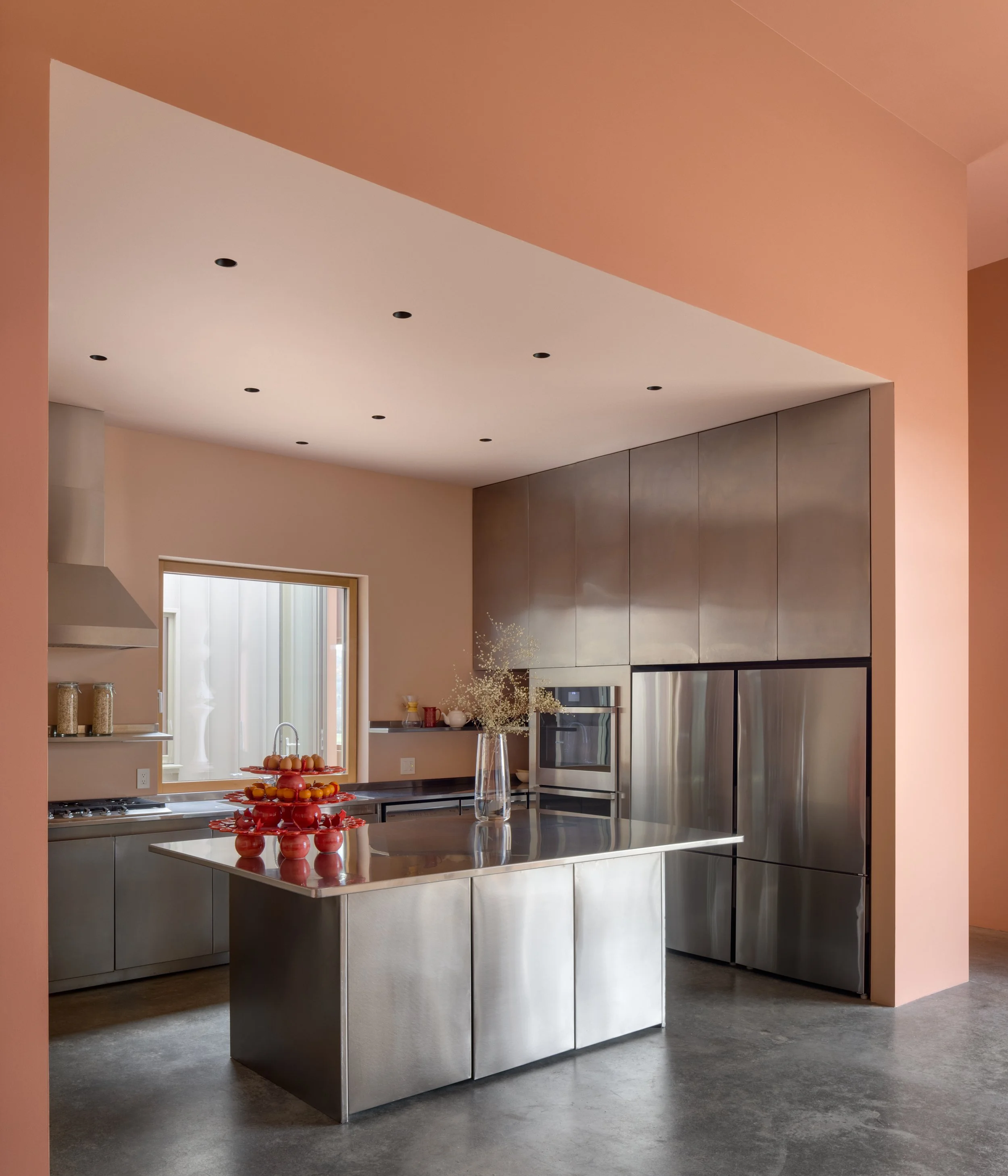
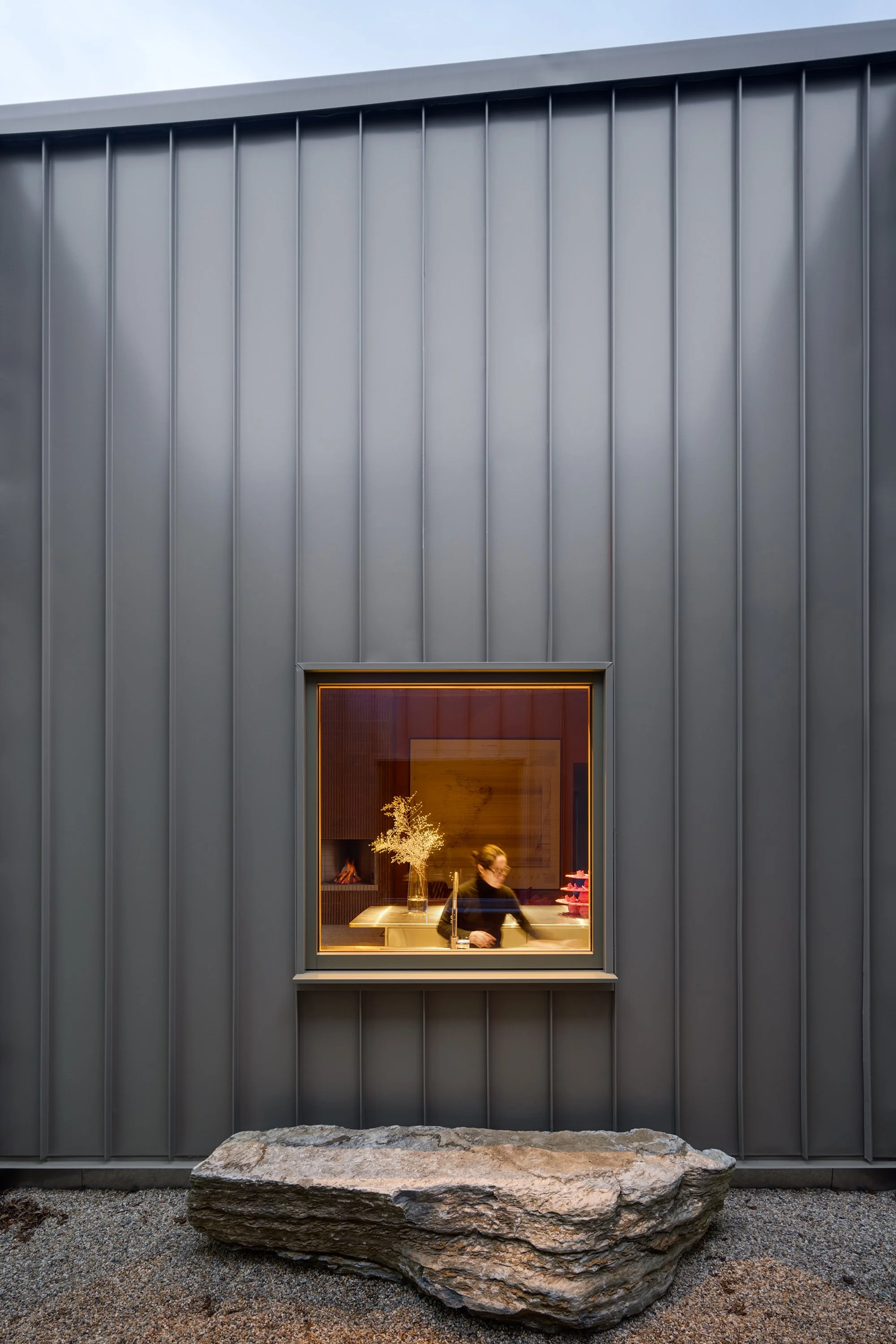
This contemporary longhouse incorporates an engineered wood framing structure, a continuous insulation system, and a breathable weathering membrane designed for lasting durability and energy efficiency. The facade is wrapped with an abodo wood screen, creating a porous, ventilated exterior that enhances the natural airflow throughout the building. The open-joint cladding system, combined with the building’s thermal mass, optimizes energy use for both heating and cooling. Southern-facing windows are equipped with overhangs that control solar gain, blocking intense summer heat while allowing winter sunlight to warm the concrete slabs. This stored warmth is gradually released at night, ensuring a comfortable, energy-efficient indoor environment year-round. Strever Farm Longhouse is a complete system —its continuous envelope, thermal mass, and radiant floors— creates a resilient, sustainable structure that withstands extreme summer heat and humidity as well as harsh winter temperatures and snow loads. This design brings forward an architecture of restrain that works with its surroundings through constant renegotiation.
Location: Dutchess County, NY, USA
Project Year: 2025
Project Area: 4,000 sqft
Status: Built


PHOTOGRPHY: RAFAEL GAMO